Preliminary
Here is our completed preliminary task. I was behind the camera creating the angles in which to film and hopefully when filming our thriller opening we can look back on this and see how we could improve. There are a few errors, but I will evaluate what we did will and what we could of improved in an evaluation blog. There are also some Outtakes & Bloopers included at the very end which showed what we originally filmed and how we managed to make scene after scene until eventually we got it right. This is another way of showing how we improved.
Saturday, 29 November 2014

Thursday, 27 November 2014
Mise-En Scene
What does Mise-En Scene mean?

Mise-En Scene is a French term meaning "in the scene or frame".
There are five elements of Mise-En Scene. These are:
1. Settings and props.
2. Costume, hair and make-up.
3. Facial expression and body language.
4. Lighting and colour.
5. Positioning of characters and objects in the frame.
Colour
Colour in films was first used in 1904, when films such as "Voyage A Travers L'Impossible" were released. Frame by frame, clips were hand painted to create colour.

During the 1930s-1940s, colour was often used to represent surreal situations or fantasy - something that was considered imaginative. Black and white or sepia effects were used to show basic reality. "The Wizard Of Oz" is an excellent example of this, when Dorothy is taken away from the dull reality of Kansas (which is all filmed in sepia) to the fantasy world of Oz, where everything is in colour and is emphasised strongly with cinematic effects.
Monday, 24 November 2014
Style Of Editing
Style Of Editing
We have recently learnt about many forms of editing, and looked at films and film directors who have interpreted different ways to edit films.
(This is useful for my group for when we film, because we can edit it afterwards and add some of these effects in to make it even better.)
First of all, the movement from one shot to the next is called a transition. There are many forms of these which are used throughout films of all sorts of genres.
Straight Cut: This is probably the most common form of video transition, and isn't as noticeable as others which is probably why it is known as "invisible". It happens when one shot moves instantaneously to the next one without attracting the audience's attention. They help to retain reality.
Dissolves: This transition involves fading one shot off the screen while another shot is fading in. The audience will be able to see both shots on the screen at the mid-point of the dissolve. It is used if the film maker wants to show a connection between two characters places or objects.
Fades: This is a gradual darkening or lightening of an image until it becomes black or white. One shot will fade until only a black or white screen can be seen. It is used to indicate the end of a particular section of time within the narrative. Fading transitions can also be used to show the passing of time in a film.
Wipes: One image is pushed off the screen by another. It isn't a very popular video transition, but is effective when it is rarely used in a film because audiences can recognize it quicker than they can with other transitions. Images can be pushed left of right, and it is more common for the image to be pushed off the left-hand side as this movement is more consistent with the sense of time moving forward. It is used to signal a movement between different locations that are experiencing the same time,
Jump Cut: A jump cut is probably the most effective way to grab an audience's attention because of how quick and sudden it is - it draws them in within the space of a second. This occurs by breaking the continuity editing. This is known as discontinuity. It appears as if a section of the sequence has been removed.
Graphic Match: The film maker can choose to place shots in a certain order so as to create a smooth, visual transfer from one frame to the next. When two consecutive shots are matched in terms of the way they look, this is called a graphic match.
 Montage Theory
Lev Kuleshov was among the very first to theorize about the relatively young medium of the cinema in the 1920s. He argued that editing a film is like constructing a building. Brick by brick (shot by shot) the building (film) is erected. Sometime around 1918, Russian director Lev Kuleshov conducted an experiment that proved this point. He took an old film clip of a head shot of a noted Russian actor and inter-cut the shot with different images.
Montage editing contains many different images quickly edited together.
Continuity Editing: Retains a sense of realistic chronology and generates the feeling that time is moving forward. It may use flash backs or flash forwards but the narrative will still be seen to be progressing forward in an expected or realistic way.
Eye-Line Match: We see a character looking at something off screen and then we cut to a shot of what they are looking at.
Match-On Action: We see a character start an action in one shot and then see them continue it in the end.
Saturday, 22 November 2014
Sound Test
Sound Test
Recently we filmed our sound test. First of all we made sure we had a boom to use for the sound and also we added in some diagetic and non-diagetic sound. The diagetic sound being the natural noises from the outdoors and the non-diagetic sound being the music and sound effects that we added in. We used a lot of suspense sounds at the beginning, and we also used a lot of speech between each character in the video, with their conversation being loud or quiet. We were also able to use the camera angles we experimented with in our Cinematography video in this piece of filming to show how we have improved. However, it wasn't our best set of filming, but I feel like now we have explored how to film with both a boom and a camera with a tripod now, we can do even better when we film our preliminary and then later on our thriller opening.
Recently we filmed our sound test. First of all we made sure we had a boom to use for the sound and also we added in some diagetic and non-diagetic sound. The diagetic sound being the natural noises from the outdoors and the non-diagetic sound being the music and sound effects that we added in. We used a lot of suspense sounds at the beginning, and we also used a lot of speech between each character in the video, with their conversation being loud or quiet. We were also able to use the camera angles we experimented with in our Cinematography video in this piece of filming to show how we have improved. However, it wasn't our best set of filming, but I feel like now we have explored how to film with both a boom and a camera with a tripod now, we can do even better when we film our preliminary and then later on our thriller opening.
Thursday, 20 November 2014
Cinematography
Cinematography
This is our first task filming as a group for our AS Media Studies course. Here, we experimented with camera angles and by filming it we had shown what we had learnt through our first set of lessons. We used several camera angles such as a close up, an extreme close up, a rolling shot, a tracking shot, a low angle, a long shot, a point of view shot etc. As our first piece of filming it wasn't our best. However, now we have experimented and practiced with them a bit, our cinematography task has allowed us as individuals to know what it is we have to to improve for next time. There are also a few other camera angles and shots that we have missed out, but could put in our future work as a group.
This is our first task filming as a group for our AS Media Studies course. Here, we experimented with camera angles and by filming it we had shown what we had learnt through our first set of lessons. We used several camera angles such as a close up, an extreme close up, a rolling shot, a tracking shot, a low angle, a long shot, a point of view shot etc. As our first piece of filming it wasn't our best. However, now we have experimented and practiced with them a bit, our cinematography task has allowed us as individuals to know what it is we have to to improve for next time. There are also a few other camera angles and shots that we have missed out, but could put in our future work as a group.
Wednesday, 12 November 2014
Genre

Genre
There are many different types of genre in the film industry.
There are a good few that a stereo typically recommended and enjoyed by a certain gender, and others that I personally prefer to others. I will be discussing what types of film genres there are and will give an example of a movie of that genre. Lots of genres are often mixed together also. I will give a few examples.
Romance (50 First Dates)

A romance movie grabs the audience and follows two people usually - and pulls them into their journey so they follow a crazy and normally very emotional whirlwind love story. For example,
"50 First Dates" starring Adam Sandler and Drew Barrymore involves a man falling for a girl who suffers from a very rare case of amnesia where she forgets everything that happened in a day by the time she falls asleep at night. His task is to make her fall in love with him everyday because by the time morning comes she completely forgets who he is. Audiences are intrigued to follow him to find out if manages to do it - and at the same time are taken on an emotional journey like in most romantic movies. There is also a few barriers, which almost makes their love doomed (much like in Romeo & Juliet) and stereo typically most love stories have barriers that are eventually overcome by the couple so that that audience can rest knowing that their love was stronger than anything that life threw at them. This particular movie is a Rom-Com (Romantic Comedy) which means that there are some parts in the movie that are meant to be comical and laughed at, which doesn't make it the most dramatically romantic movie in the world, but by it having funny actors such as Adam Sandler in it, it can appeal to a wider audience of people who enjoy comedies as well as romance.
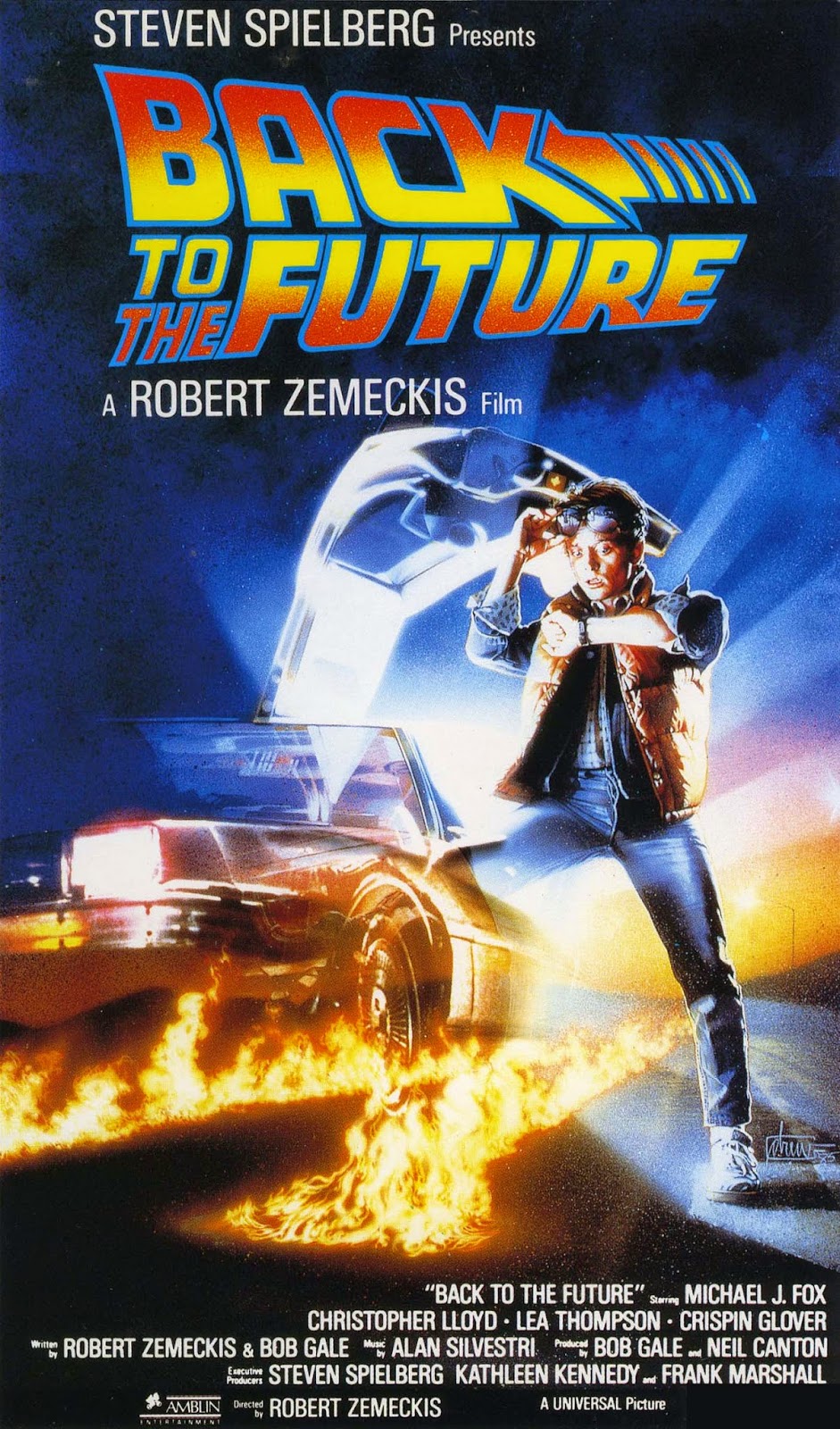
Sci-Fi/Fantasy (Back To The Future)
 A sci-fi or fantasy film involves something scientifically fictional coming to life in a movie. A film like this may involve a vast amount of special effects in editing, make up and costume design as well as an epic theme song/soundtrack to go with it. Being my personal favourite genre of film, the sci-fi drags the audience into a parallel universe where anything is possible. An example of a very successful sc-fi movie is Back To The Future which is a three-part trilogy involving a wannabe rock star teenager Marty McFly and a previously unsuccessful scientist Dr. Emmett Brown (Doc) discovering the most impossible thing in the world coming true- travelling through time. Michael J. Fox and Christopher Lloyd time travel in an 80s sports vehicle to the past, present and the future. Through this adventure, audiences are desperate to know if their two heroes come out okay at the end of the story, and the first two movies are obviously left on cliffhangers to make the audience thirst for more, especially when time after time something goes incredibly wrong which causes various problems. This happens a lot within sci-fi movies; the audience follow their hero (which is stereo typically a young and strong male figure in a genre like this one) and there are usually a lot a villains which he must fight and get past so that they come out victorious. Sci-Fi movies are often very expensive to make, simply because they require a lot of special effects and constant editing to bring a fantasy to life in the audience's eyes. For example, in Back To The Future there was about three or four prop cars of the time travelling DeLorean because of how frequently and quickly they had to film it over the course of the trilogy.

Comedy (A Million Ways To Die In The West)
 A film within the Comedy genre is made to make the audience feel a sense of joy - whether it be dark humour or dry humour, it is there to entertain and make the audience laugh, and even if they don't laugh out loud it is supposed to appear as amusing. A basic plot with a main character and his/her friends takes the audience on a comical adventure so that they can experience everything that the character does, even if that means the character embarrassing or making a fool out of them self. An example of a recent comedy movie that came out in 2014 is A Million Ways To Die In The West starring Seth MacFarlane, Amanda Seyfried, Charlize Theron and the well-known Liam Neeson. The plot follows a hopeless romantic, Albert, who is a sheep farmer and can't shoot a gun to save his life. He loses his "gold digger" girlfriend Louise to a richer and more socially acceptable man in the mid 1800s and makes a plan to win her back. Then he meets the tomboyish Anna, who teaches him how to shoot a gun and offers to help him win Louise back, and things suddenly seem to be going really well for him. Eventually he realizes that what he really needed was right there in front of him the whole time, and the audience follow the plot into realizing that both Albert and Anna end up falling in love, and Albert confronts Louise knowing now that he shouldn't need money to buy true love. While this movie holds a lot of laugh-out-loud adult comedy, it also forms into a love story, but at the same time nothing is taken very seriously throughout the movie and the whole concept is to make the audience laugh as well as be caught up in an interesting plot twist. Lots of other comedy movies involve plot twists which are often unexpected and make them a lot more exciting to the audience.
Wednesday, 5 November 2014
Modern Thriller Openings
"Brick"
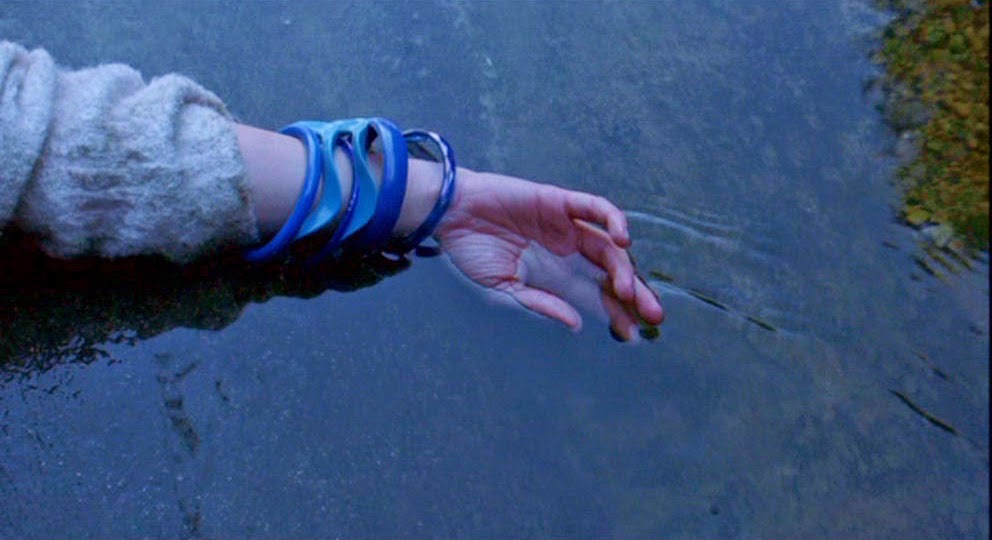
The opening of this thriller begins with scratchy bells ringing and the entire outlook is all set within a blue colour. The opening is blue dominated, which symbolises the sad and sorrowful atmosphere - this is appropriate for a thriller, so this effect actually works very well.
The firs character we see is crouching next to a dead girl, and on her wrist is a blue bracelet which also mixes in with the blue overlook. The music is bone chilling and the feeling of being cold comes into it also, so audiences realise how depressing the director is trying to make the film look.
 "Zodiac"
The opening of this thriller begins with scratchy bells ringing and the entire outlook is all set within a blue colour. The opening is blue dominated, which symbolises the sad and sorrowful atmosphere - this is appropriate for a thriller, so this effect actually works very well.
The firs character we see is crouching next to a dead girl, and on her wrist is a blue bracelet which also mixes in with the blue overlook. The music is bone chilling and the feeling of being cold comes into it also, so audiences realise how depressing the director is trying to make the film look.
 "Zodiac"
This thriller opens up with a tracking shot from a car pulling up to a house. The suspense builds as soon as the man gets into the car with the girl, and they pull up to a deserted place. It is dark outside, and the radio in the car is playing faintly in the background. The people in the car jump when a group of people have sneaked up behind them and set off fireworks. They calm down when the group drive off. But then we see a shadowed figure walk up to the car and we cannot see his/her face. This makes the audience wonder who it is, especially when the person shoots the boy and the girl, then walks off. This creates an interesting opening and makes the audience wonder what is going to happen next.

"No Country For Old Men"
At the beginning of this film, there is no music and just an opening speech. We are unsure of who it is that is speaking, but it is pretty clear to the audience that it is a grown man from the West. Throughout the speech, on screen we see a series of tracking shots of the West, and then it cuts to another scene where a police officer is talking on the phone. Most of the colours we have seen so far are similar beige and brownish colours that are quite neutral. But then there is a sense of dramatic irony when we see a dark figure size up the man on the phone in the back ground, the black clothes he is wearing contrasting with everything else so that the audience instantly know he is symbolising danger. There is dramatic irony here because he slowly creeps up behind the police officer and prepares to strangle him, but the man is unaware of this and only the audience are. When the dark man strangles him, there is a great rolling shot of his struggling to show the madness of the situation, as this is probably one of the most shocking scenes in the film.
"A History Of Violence"
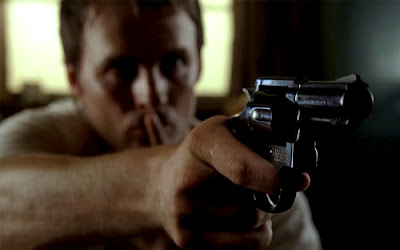
At the beginning of the film there is no music and the opening is pretty basic and ordinary. There is an eerie hissing sound at the start of it, and the characters exchange words with no emotion in their voices. When the tracking shot of the man pulling up in his car is over, we see him get up and walk into the building, and this is where the chilling music slowly begins to build up. It starts off very minor and then gets louder and more dramatic. The situation falls into panic when the man reveals a corpse on the floor. The music becomes very over the top at this point, and then the man slowly pulls out a gun when he sees the little girl appear. He puts a finger to his lip and then pulls the trigger aiming the gun at her, then the gunshot is fired which triggers the screaming of a different girl in the next scene. This leaves the audience in frustration because they are left wondering what happened to that girl and the man with the gun - did she really end up getting shot?

"No Country For Old Men"
At the beginning of this film, there is no music and just an opening speech. We are unsure of who it is that is speaking, but it is pretty clear to the audience that it is a grown man from the West. Throughout the speech, on screen we see a series of tracking shots of the West, and then it cuts to another scene where a police officer is talking on the phone. Most of the colours we have seen so far are similar beige and brownish colours that are quite neutral. But then there is a sense of dramatic irony when we see a dark figure size up the man on the phone in the back ground, the black clothes he is wearing contrasting with everything else so that the audience instantly know he is symbolising danger. There is dramatic irony here because he slowly creeps up behind the police officer and prepares to strangle him, but the man is unaware of this and only the audience are. When the dark man strangles him, there is a great rolling shot of his struggling to show the madness of the situation, as this is probably one of the most shocking scenes in the film.

"A History Of Violence"
At the beginning of the film there is no music and the opening is pretty basic and ordinary. There is an eerie hissing sound at the start of it, and the characters exchange words with no emotion in their voices. When the tracking shot of the man pulling up in his car is over, we see him get up and walk into the building, and this is where the chilling music slowly begins to build up. It starts off very minor and then gets louder and more dramatic. The situation falls into panic when the man reveals a corpse on the floor. The music becomes very over the top at this point, and then the man slowly pulls out a gun when he sees the little girl appear. He puts a finger to his lip and then pulls the trigger aiming the gun at her, then the gunshot is fired which triggers the screaming of a different girl in the next scene. This leaves the audience in frustration because they are left wondering what happened to that girl and the man with the gun - did she really end up getting shot?
Subscribe to:
Posts (Atom)